


Every RunThis Labs experiment that goes viral has a dozen behind it that flatlined in silence. Fantasy Financial is one of those. It started with a legitimately sharp observation, got built into a full brand with real production value, and then hit a legal wall that killed it before it ever had a chance. Welcome to our breakdown of a failed idea from RunThis Labs.
THE HYPOTHESIS
Fantasy football leagues have become borderline financial institutions. The average competitive league has a $100–500 buy-in. High-stakes leagues run $1,000+. Commissioners are essentially fund managers. Owners treat first-round picks like blue-chip stocks.
The language is already there. Players “invest” in a running back, “hedge” with a handcuff, and call a bust a “sunk cost.” Could we make some noise online by playing into this connection in a way that turns degenerate fantasy owners into sound financial decision makers?
THE IDEA
Introducing Fantasy Financial. The first-ever fantasy football wealth advisors. A team of finance industry and fantasy football veterans dedicated to helping your team win, no matter the score.
Three service lines:
First Pick Insurance
Protect your league investment against injury to your top draft pick. Because 1 in 3 first-rounders miss 3+ games.
Entry-Fee Loans
Same-day loans for league buy-ins. Interest rates apply. Get your commissioner off your back.
Prize Pot Investment
Let advisors put your league’s prize pool to work during the season. Idle funds don’t win championships.
The vision was to take in league prize pools, invest them during the season, and return them with gains at playoff time. Offer real insurance on first-round picks. Issue actual entry-fee loans. A legitimate fintech company for the $11 billion fantasy sports industry.
THE ROADBLOCK
Then someone did the math on the legal side.
Managing other people’s money requires SEC registration, state-level financial advisor licensing, and compliance with a web of regulations. Offering insurance requires state licensing. Issuing loans requires lending authority. Every single service Fantasy Financial was built around was a regulated financial activity. We were sitting on a felony disguised as a creative idea.
THE PIVOT
Instead of shelving the concept, the team tried to salvage it. The new angle: treat Fantasy Financial as a satirical stunt. An “is this real or not” campaign, SNL-style. The absurdity of a financial company for fantasy football would make people stop scrolling, debate whether it was legitimate, and share it for the confusion factor alone.
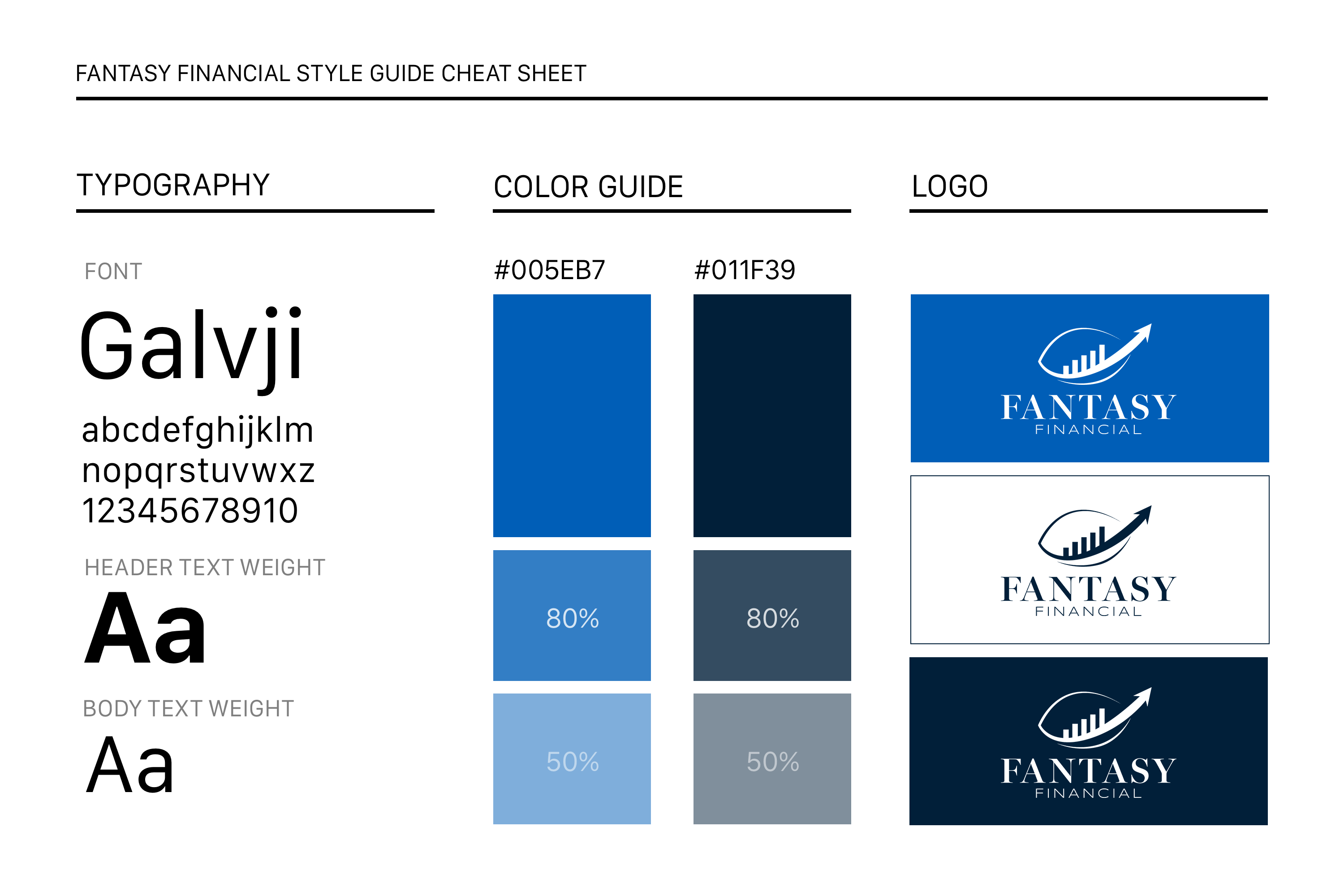
So we built the whole thing anyway. Full brand identity. Style guide. A functioning Wix website at fantasyfinancial.org with a “Client Login” button that went nowhere and a “Schedule a Call” CTA for a service that didn’t exist. The site claimed 15+ expert analysts, 150+ proud clients, and a 91% satisfaction rate. The founder bio introduced “Ethan Schefter”—a name designed to echo ESPN’s Adam Schefter—as a league commissioner turned financial pioneer.
The content deck had over a dozen planned assets: stat infographics framing draft picks as volatile assets, fake testimonials from managers at leagues called “The Gluten Free League” and “Pitts N Giggles,” commissioner pain-point carousels, and a meme series. Every piece was designed to play it completely straight.
Then came the centerpiece: a brand video. We hired an actor on Fiverr to play Ethan Schefter, the Fantasy Financial CEO, delivering a dead-serious pitch about protecting capital and managing risk for fantasy football managers. The production value was intentionally corporate. It looked like a real fintech ad.
THE LAUNCH
On August 25, 2025, the team launched @fantasy.financial on Instagram. All nine posts went up the same day—a full content calendar compressed into a single afternoon.
THE DATA
The CEO reel pulled 16,975 plays but only converted 74 into likes. The static posts averaged less than 1 like each.
The 4 comments on the CEO reel told the whole story:
Four comments, four completely different reads. SNL sketch. Scam. Awesome. Satire. But with nothing real to latch onto, the conversation stopped there.
Key Findings — By the Numbers
THE TAKEAWAY
Fantasy Financial is a case of a solid idea that fell apart in the details. On paper, it sounded awesome. But as we peeled back the layers, the idea was reduced to a couple posts and a website.
- Satire needs substance. The moment we killed the actual financial services aspect of this idea, we took away its engine. With nothing real to latch onto, our satirical content just left people confused. Breaking through here takes that “I can’t believe they really did this” element which the legal side of this idea forced us to remove.
- Fiverr is your friend. The guy who played Ethan Schefter was a star. He was quick, inexpensive and really came off authentic. Even though the video didn’t perform like we had hoped, it felt legit. With more meat behind the concept, a video like this is a great entry point into the idea ecosystem. You just need a world worth entering into.
- Not every idea is essential. We brought this to life because we felt it was wrong to let a good idea die over a legal hiccup. But in the process, we removed what made it special. We could have saved a lot of time and a bit of money by just stopping there. But, we didn’t. And honestly, we don’t really regret it either.