


Just before the holidays, the team noticed text based content was performing significantly well on IG Reels, the main content discovery engine on the internet right now. We wanted to see how far the text based format could stretch. Could it become a storytelling device that you could actually build a fandom around? Enter: the world’s first ever text based sitcom for Instagram reels. (We think).
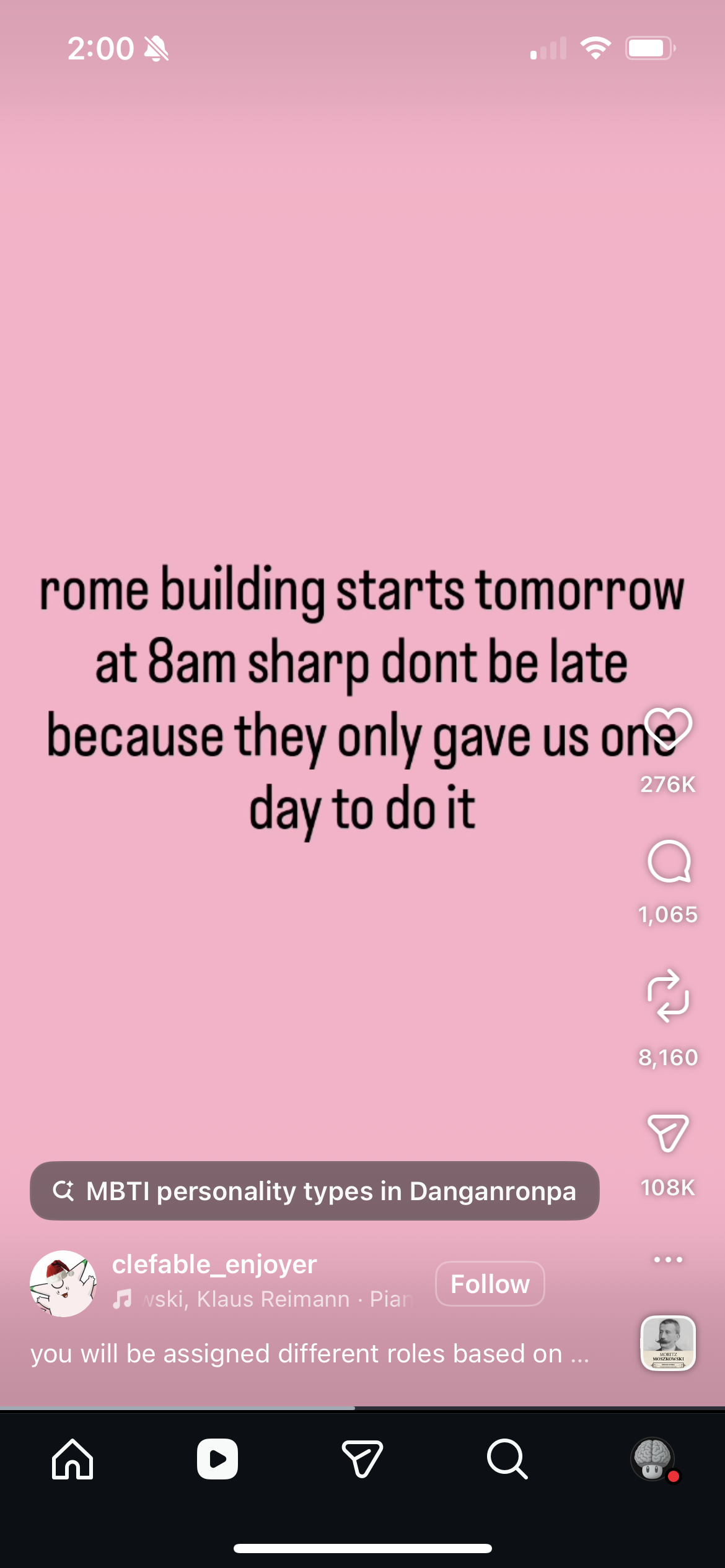
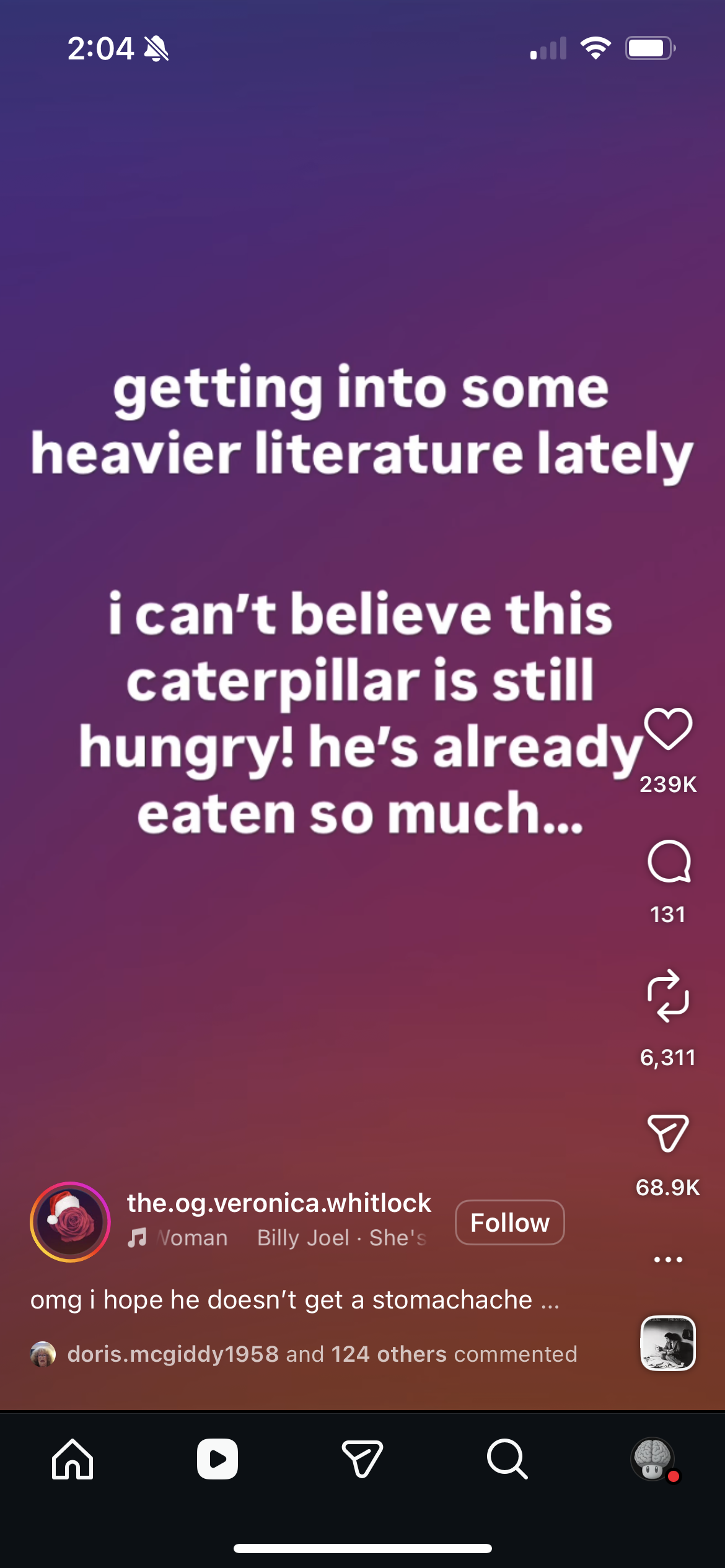
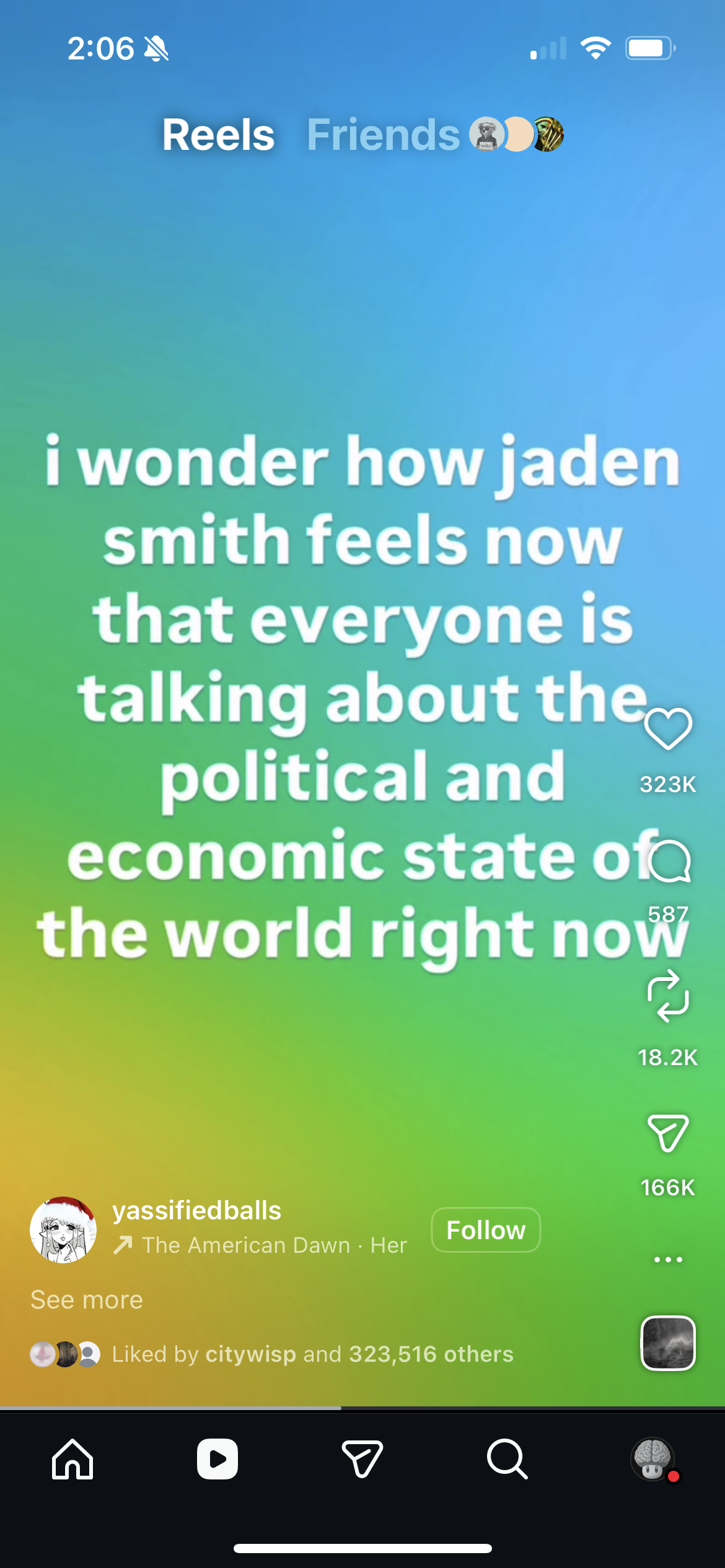
THE HYPOTHESIS
We bet that the classic style, energy and tropes of the high school sitcom were so universally understood, that just reading a description of a storyline and seeing an image of the characters would be enough to make the whole thing play out in the viewer’s head.
In a world where funding for cinematic projects is hard to come by, text-based Reels strip the production overhead down to almost nothing—no cameras, no talent fees, no post-production pipeline. If the format worked, it would mean any brand or creator could launch a serialized entertainment property for effectively zero dollars.
THE IDEA
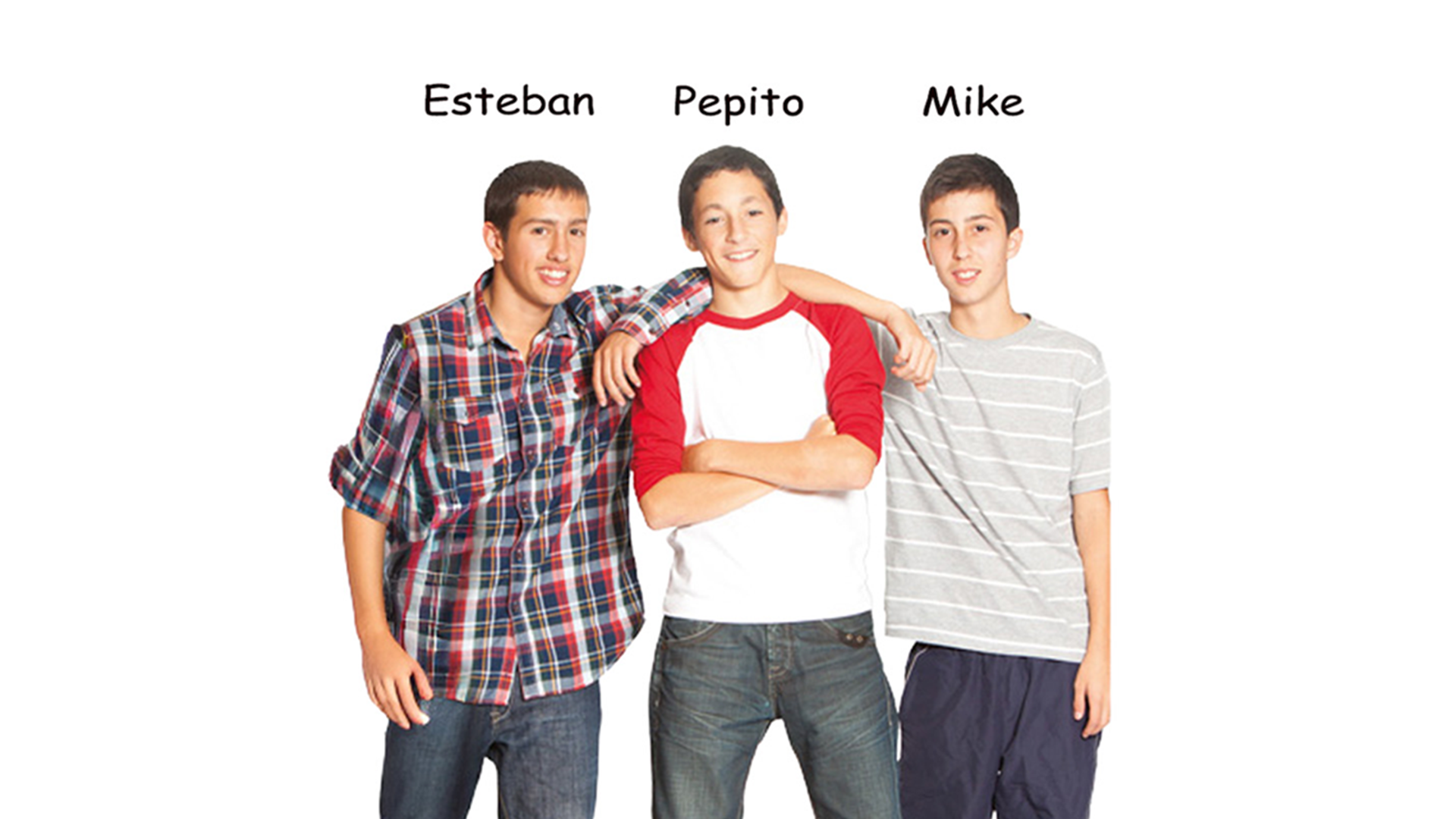
We took 3 stock image characters from a high school Spanish textbook and turned them into the protagonists of “Escuela High”. Escuela High is exactly as you would expect. Think Superbad meets early 2000’s Disney channel movie...first day of school jitters, classroom drama, fake ID’s. We developed character personas, plot line, sets, etc. all the things you would expect in a text based social sitcom.

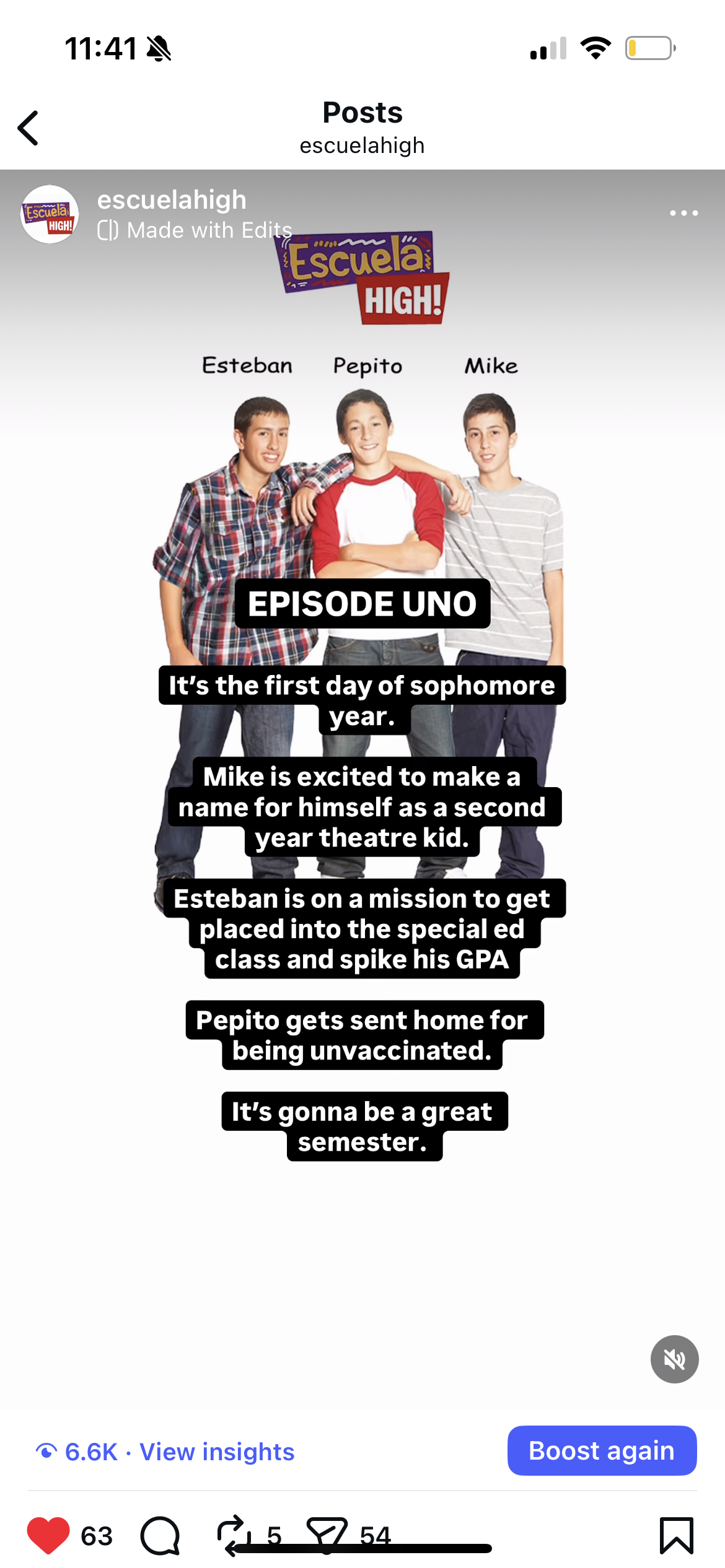
Each episode featured just 3 elements.
- An image of the cast with the show’s logo and each character’s name
- A short description of the narrative arc each character goes through
- A 4 second mariachi band audio track.
The show had 3 characters each with their own traits and motivation.
- Esteban: Rich, spoiled and the coolest kid in school (at least in his own head)
- Pepito: The kind hearted, yet unfortunate kid from the wrong side of the tracks. He’s poor in love but rich in heart.
- Mike: An insecure kid struggling with his self identity. The breakout star of season 1.
THE DEPLOYMENT
The “show” launched with 10 episodes to little to no fanfare.
But the team just kept churning out new episodes. Over time it found its footing (193 fans and growing!)
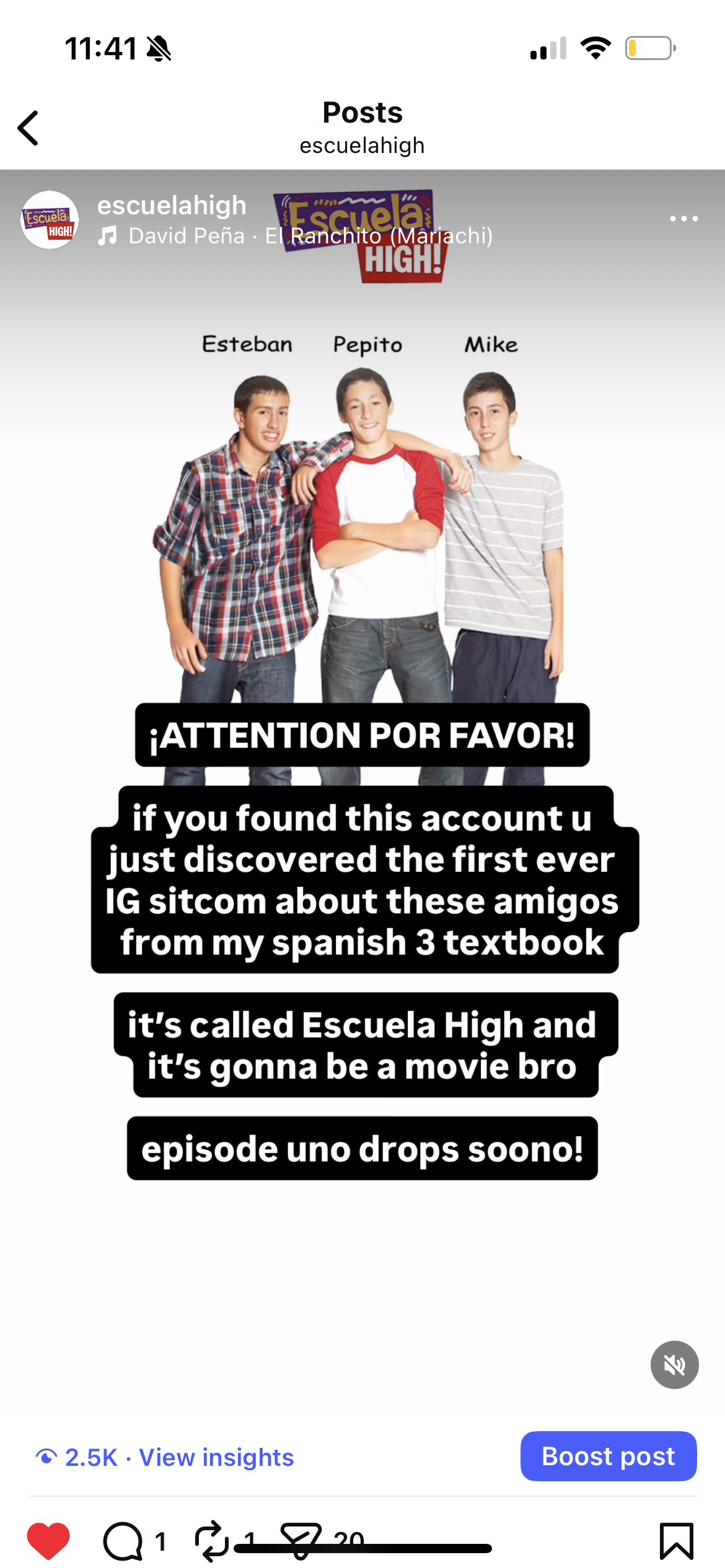
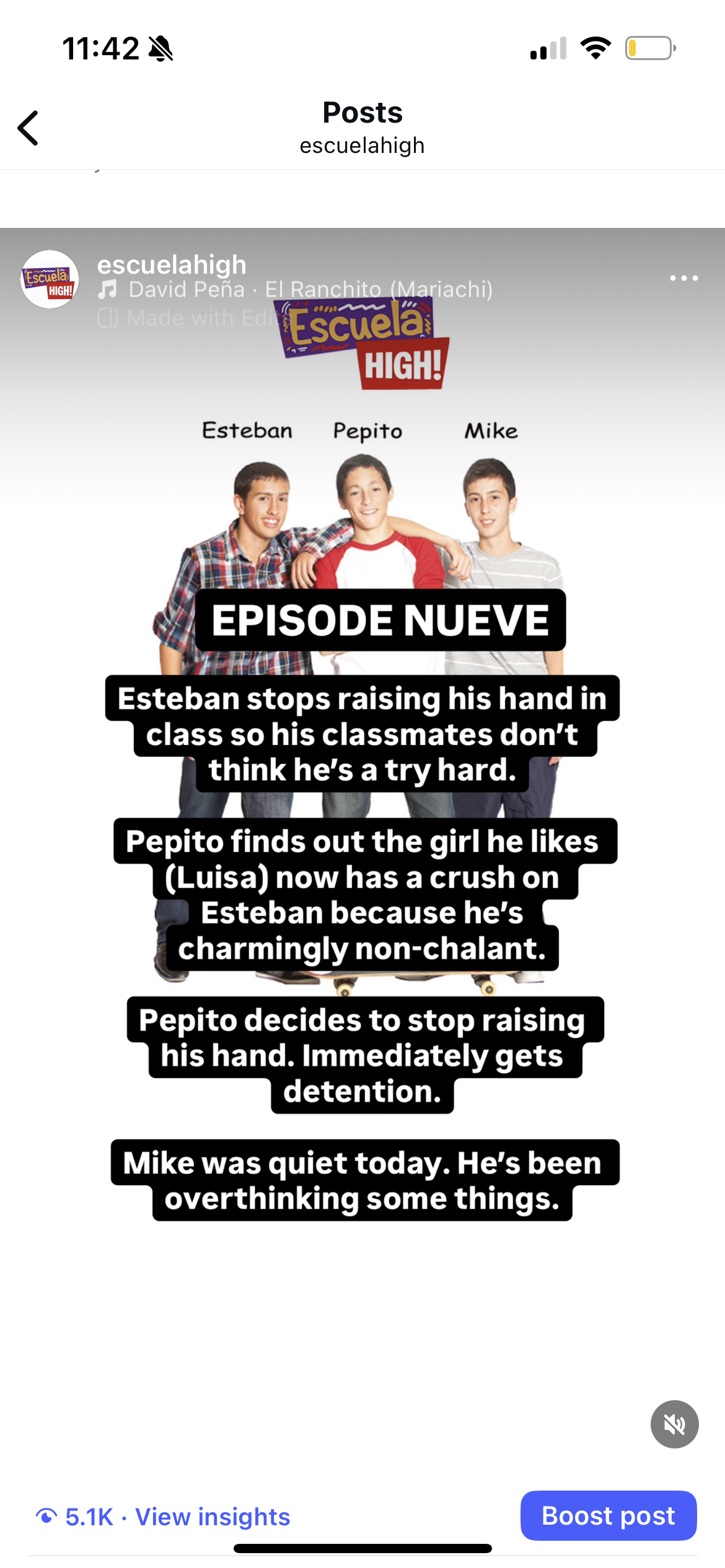
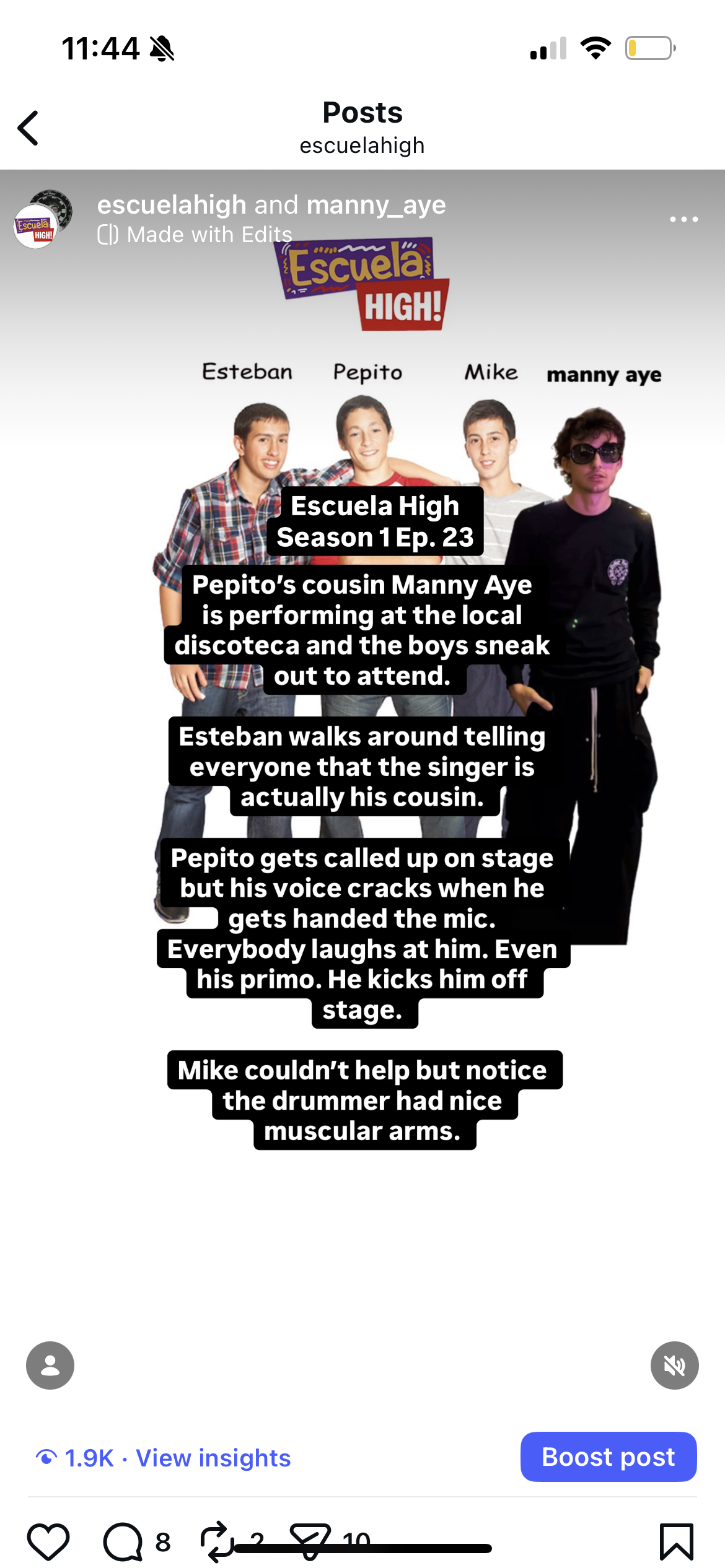
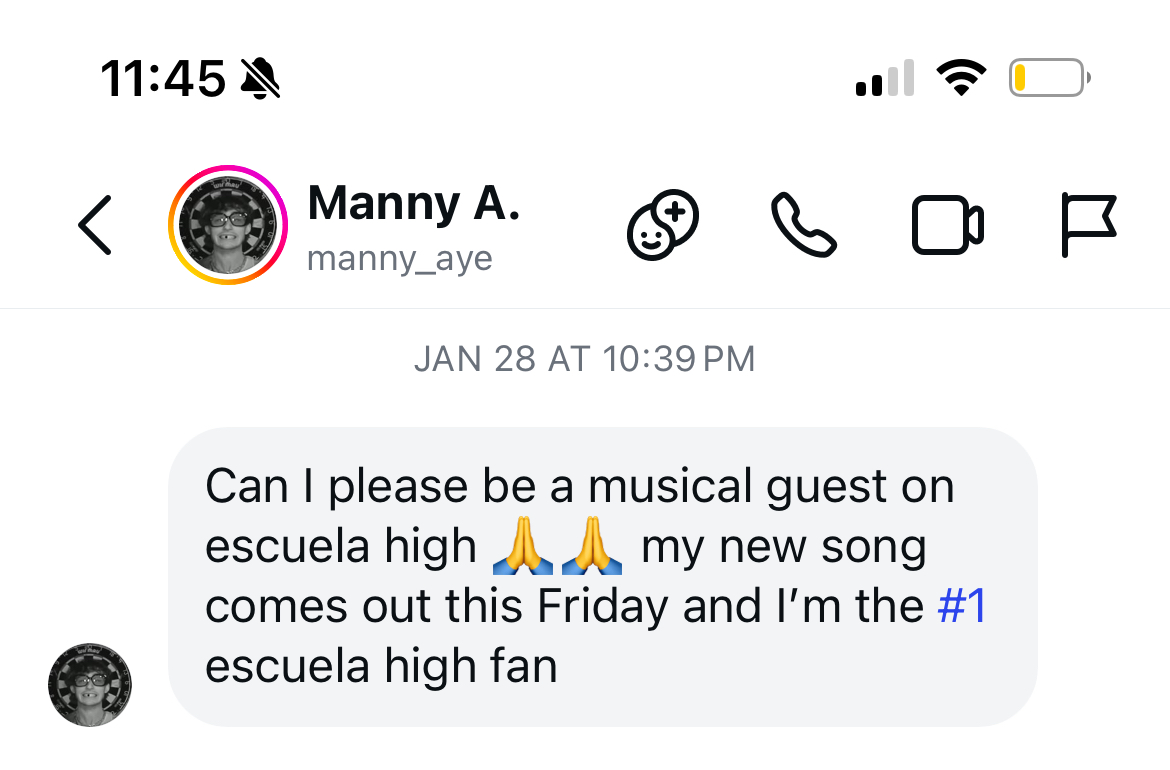
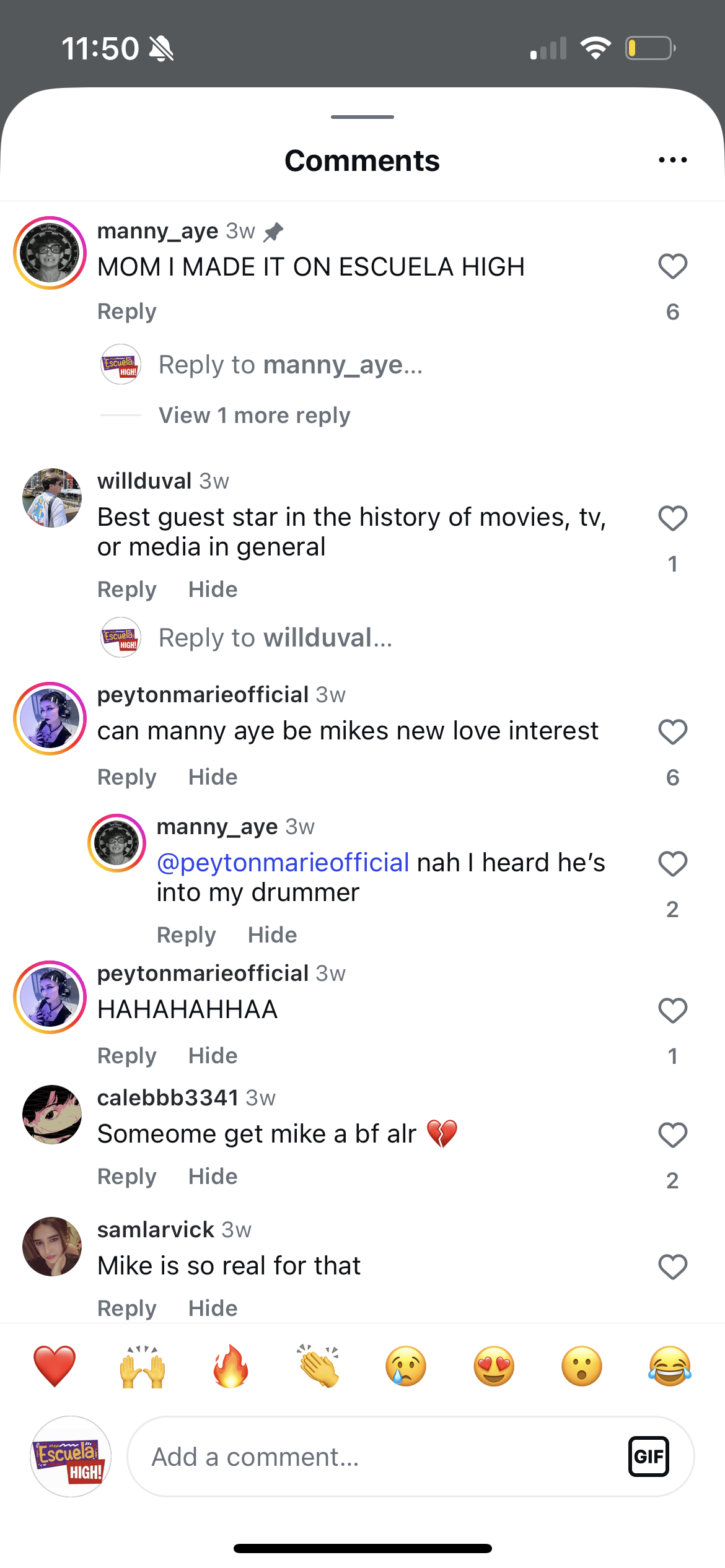
Slowly but surely, it kind of took on a life of its own. Favorite characters started to emerge amongst the audience. Fans started getting involved in the story. One fan, an up and coming musical artist, even asked to guest star in an episode on the day his new EP released as a promotional stunt (shout out Manny Aye).
Eventually, a group of fans joined a group chat based writers room, and built their own Discord community own projects, pitch storylines, and write new episodes together.
At some point Escuela High stopped being content we were posting and started becoming something people were participating in. They started feeling ownership. This might actually be how modern IP starts.
This might actually be how modern IP starts.

WHAT WE LEARNED
- Fandom over format. The right story and presentation can help build an emotional connection around anything.
- If you can get followers to buy in on the overall concept, you can get them to follow along for the narrative.
- There’s few things more powerful than getting the community involved in the creative process in a tangible way.