
Every week, another brand announces a capsule collection. Another limited run. Another drop. And the press eats it up. RunThis Labs wanted to challenge the concept of drop culture as a whole with an idea that pushed the boundaries of what a “drop” actually is.
THE HYPOTHESIS
Can you get featured by Instagram fashion and culture pages for a product drop that doesn’t physically exist? The team wanted to test whether presentation and concept alone—executed at the level of a real product launch—could earn the same editorial treatment as an actual fashion release.
THE IDEA
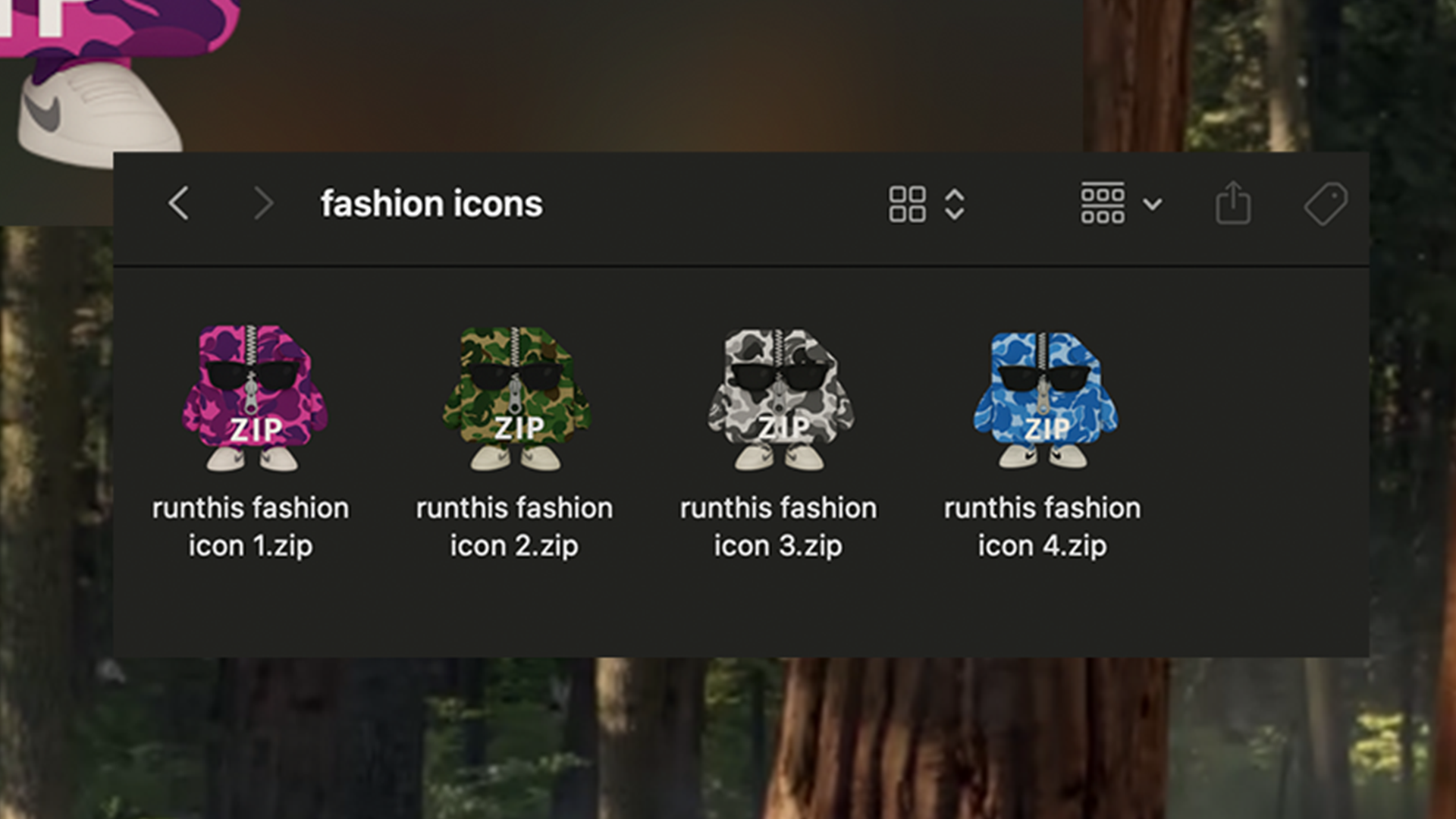
Have you ever looked closely at the artwork of a .zip file? It has a little zipper that looks a lot like a zip-up jacket.
 BEFORE
Inspired by the classic Bape camo jackets, we designed a collection of custom .ico files—the icon files that determine how folders and files display on your desktop—that turned ordinary .zip files into fashion icons.
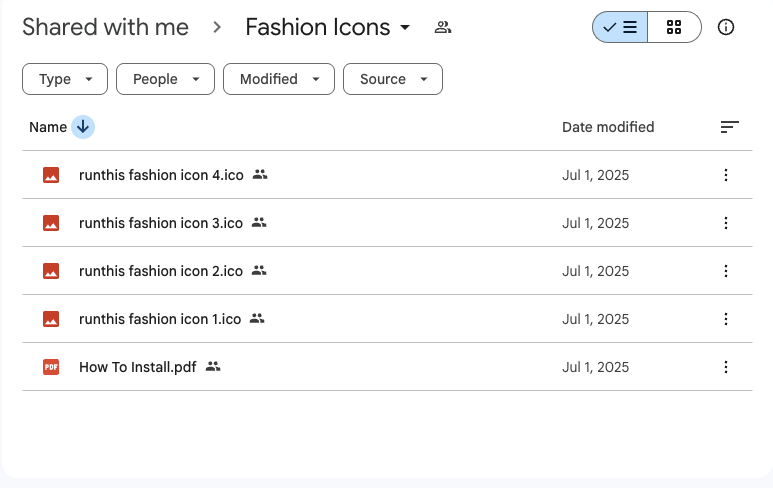
The delivery method was a Google Drive link with step-by-step installation instructions. Anyone could download it, install it on any OS computer, and walk away with something tangible. The product was real. It just wasn’t physical.
You don’t need a factory to get featured. You need a concept sharp enough that the pages can’t tell the difference.

THE DEPLOYMENT
We dropped the idea with a Reel on our main RunThis brand page—inviting followers to drop a “🤐” in the comments to get the download link sent to their DMs—and a more detailed carousel on our RunThisLabs page.
We leveraged the DM relationships we’ve built with culture page admins to share the idea, and ultimately got the project picked up by a collection of pages totaling over 2.3 million followers.
THE RESULTS
On our original @runthis_ Reel, 31 people dropped the 🤐 emoji in the comments to get the download link sent to their DMs—an immediate signal that people wanted this thing before any culture page had even picked it up. But the real proof came after the pages started posting. Across every single pickup—from @beams.archive to @drip—people engaged with it like it was a real drop.
They weren’t treating it like a meme or a novelty. They were asking where to buy it. They were tagging friends. They were saying they were installing it right now. The comment sections read identically to what you’d see under an actual fashion release—because nobody could tell the difference.
Key Findings — By the Numbers
The Discovery
First contact. Genuine confusion about whether this is a real product—which is exactly the point.
The Demand
People treating it like a real drop. Asking where to buy. Needing it immediately.
The Adopters
Didn’t ask questions. Just installed it. Already imagining what their files look like now.
The Cosign
Saw the bigger picture. Endorsed the concept. Spread the word that it was free.
THE TAKEAWAY
- Presentation is the product. Culture pages didn’t feature this because it was a real hoodie—they featured it because it looked like one. The carousel, the photography angles, the product shots were indistinguishable from a real drop. If your concept looks the part, the internet treats it as the real thing.
- Digital products can earn physical product press. The comment section proves it: people were asking where to buy, saying they’d install it, calling it fire. Nobody asked “but is it real?” The bar for “real” in culture is lower than most brands think—it just has to be real enough.
- Free + functional = shareable. By giving people an actual downloadable file via Google Drive, the “drop” had a tangible takeaway. It wasn’t vaporware—it was real software that changed your desktop. That completeness made it credible and gave culture pages something concrete to write about.
- Small accounts can seed big coverage. RunThis Labs had 464 followers when this happened. No paid promotion. The concept generated nearly 6,800 combined likes across @drip and @superlinenetwork alone—reaching over 2.3 million followers from an account with less than 500. Relationships matter, but the idea has to be sharp enough to justify the post.
The playbook is proven: concept → presentation → free distribution → culture page pickup. You don’t need inventory. You need an idea that looks like inventory.